Jan 2026

From original sin to war expropriation: asset redistribution in Russia

Wartime Russia is experiencing the largest redistribution of property since the 1990s. The Prosecutor General's Office has filed over 170 lawsuits to seize assets worth more than 53.5 billion euros. Nationalizations and forced sales have affected 12% of the billionaires on the Russian Forbes list. What will be the consequences of such massive changes in ownership? Will the Kremlin be able to maintain control over the process? This study examines the scale of this wave of property redistribution, its effects on property rights, and the extent to which it could destabilize the regime.

Download PDF

This project is funded by the Friedrich-Ebert-Stiftung and carried out in cooperation with its Russia Programme.

Cedar report by Fabian Burkhardt, Antonina Asanova, Timofei Mikhasev, Denis Morokhin, Arnold Khachaturov

Infographics by Ksenia Storozheva

Key findings

  • The largest redistribution of property in Russia since the 1990s began before the war, in 2021, but reached its peak in 2024–2025.
  • 12% of the billionaires on the Forbes Russia 2021–2023 list have experienced either a nationalization of their assets, an attempted seizure, or an involuntary sale on non-market terms.
  • The total value of assets for which the Prosecutor General’s Office filed seizure claims from early 2022 to late 2025 exceeds 4.99 trillion rubles (53.5 billion euros). Of those assets, 2.6 trillion rubles (27.5 billion euros) belonged to billionaires on the Forbes list.
  • In addition, Russian billionaires involuntarily sold assets worth over 1.6 trillion rubles (equivalent to 17.6 billion euros on the dates of sale) after the beginning of Russia’s invasion of Ukraine in 2022. We considered all exits from Russian assets after 2022 to be involuntary sales.
  • The main beneficiaries of this process are state-owned corporations and Vladimir Putin’s inner circle. Therefore, this process is not aimed at forming new business elites, but rather, at further concentrating assets in the hands of Putin’s cronies.
  • Despite the regime becoming more personalized following the invasion of Ukraine, the redistribution of property remains a complex, multi-layered process affecting upper- and mid-level elites and bureaucrats. At the same time, there are no signs that Putin is losing control over the transfer of ownership of the largest and most important enterprises.
  • Even if nationalization were to expand further, it is unlikely that big business would take collective action to exert political pressure on the Kremlin.
  • So far, the redistribution of property does not directly threaten the stability of the authoritarian regime or its ability to wage war. However, it increases the burden on the system, heightens the risk of inter-elite conflicts, and paves the way for potential challenges in the post-Putin era.

Introduction

In April 2025, the Financial Times (FT) identified the Rotenberg family as the primary architects and beneficiaries of the largest redistribution of property in Russia since the 1990s. The Rotenbergs have been friends of Vladimir Putin’s since his youth. According to the FT’s sources, one of Russia’s richest families and the president’s judo sparring partner developed a plan to confiscate and transfer valuable assets to new owners on a large scale. The Rotenberg family hired an army of advisers and analysts whose job was to find relevant companies and prepare lawsuits for the prosecutor’s office, enabling it to send formal requests to the court to seize businesses.

In addition to their enormous influence and the fact that the Rotenbergs have already received six enterprises taken from private businesses and want at least one more, there is another argument for their involvement in this campaign. When the court decides on nationalization based on a claim by the Prosecutor General’s Office, the asset is then transferred to Rosimushchestvo, Russia’s state property management agency, which sells the business. Rosimushchestvo is headed by Vadim Yakovenko, whose ex-wife, Olga Yakovenko, works in one of the Rotenbergs’ companies. According to The Insider, the couple divorced in name only, yet continue to live and travel together.

Nevertheless, Cedar’s data suggests that the nationalization process is much more complex. The interests of just one clan cannot explain it — the process involves many actors, both at the top and at the bottom. In this report, we analyze the process’s driving forces, pace, scale, and participants, as well as its winners and losers.

Centrally-led corporate raiding in Russia’s piranha capitalism: empirical setting and theoretical background

Following the collapse of the USSR in the 1990s, oligarchic capitalism emerged in Russia. Amidst weak statehood and Yeltsin’s electoral challenges, a select group of businesspeople with ties to the highest political circles amassed substantial fortunes and gained unparalleled political influence.

The weak state sought help from big business to finance Yeltsin’s election campaigns. Capital owners’ strong bargaining position earned them political influence, resulting in insider privatization. The majority of Russian citizens perceive the privatization of the 1990s as unfair (Denisova et al., 2009). The main reasons behind this perception are information asymmetry, significantly undervalued assets transferred to private hands, and unequal access to auctions. The original defect in the establishment of property rights rendered large business owners illegitimate in the eyes of society, thus creating the possibility of revising transactions and expropriation, even after some time has passed. Frye (2006) refers to this situation as the “original sin” of property rights in Russia.

In the 1990s, when the state was weak, violent solutions to business conflicts became common. Criminal groups acted as key arbitrators, deciding the fate of assets (“violent entrepreneurship”, according to Volkov, 2002). At the same time, large firms established their own security services which were referred to as “private armies” (Gans-Morse, 2017). In the late 1990s, however, state capacity strengthened, resulting in a sharp decline in uncontrolled violence. There was a clear increase in the use of formal institutions, such as courts, to resolve business conflicts. However, violence was not replaced by the rule of law. Rather, gangsters were replaced by corrupt security forces (Gans-Morse, 2017). Researchers describe the further evolution as a transition from “business capture of the state” to “centralized corruption” (Rochlitz, Kazun, and Yakovlev, 2020) or “centrally-led corporate raiding” (Madlovics and Madyar, 2021), in which property owners are now threatened not by private raiders but by the state itself.

Authoritarian consolidation took place during Putin’s first two terms (2000-2008). The abolition of direct gubernatorial elections in 2004 fully transformed Putin’s regime into an electoral autocracy (Golosov, 2011). The economy underwent post-crisis stabilization: the state successfully established administrative and fiscal verticals, strengthened treasury control, and centralized revenues. At the same time, the decade following Putin coming into power in 2000 saw the culmination of raiding practices (Viktorov, 2019). A key turning point occurred in October 2003 with the arrest of Mikhail Khodorkovsky, one of Russia’s richest men at the time and head of the Yukos oil company. This arrest signaled that the state could illegally seize large assets (Aslund, 2007). The new deal between the state and big business was simple: billionaires could keep their property as long as they stayed out of opposition politics and demonstrated loyalty to the regime (Markus, 2022). The oil boom of the 2000s and early 2010s dramatically increased budget revenues and reduced the motivation for serious change. Reformers lost their agenda and were pushed out by state-owned companies and security forces, while political connections became the main tool for redistributing oil and gas wealth among regime insiders (Grigoriev and Zhirkov, 2020; Lamberova and Sonin, 2018).

After 2009, the Kremlin became less tolerant of predatory and decentralized practices by lower-level officials, concentrating rent control at the top (Rochlitz, Kazun, and Yakovlev, 2020). Under Putin’s regime, the arbitrary actions of “independent” security forces were partially restricted, and the higher-level state became the main “raider” with regard to politically sensitive assets.

The 2011-2012 protests triggered a realignment of the system. In particular, the authorities attempted to address the demands of the urban middle class by improving governance efficiency through technocratic practices (Yakovlev, 2025). The drive toward digitalization, improved administrative discipline, and lower barriers to business functioned as elements of state capacity that limited state capture practices (Hellman et al., 2000).

The annexation of Crimea, the onset of the war in Donbas, and the economic slowdown of the 2000s created conditions conducive to the coexistence of two economic models (Yakovlev, 2025). Increased repression and further institutionalization of corruption transformed Russia into a state with mafia-like characteristics, where autocracy functions as a centralized clan-patronage system of rent extraction (Magyar, 2016). At the same time, sanctions and dependence on imports created incentives to follow the path of a developmental state, characterized by import substitution, support for specific industries, strengthened technocratic governance, and investment in development institutions and industry (Amsden, 1989).

Finally, it is important to understand that the resilience of the Russian economy, even under unprecedented pressure put on it since the start of the war, stems from the preservation of a market economy system throughout Putin’s rule. Market institutions established by reformers in the 1990s, the adaptability of Russian businesses, and the state’s limited interference in regulation ensure the flexibility of the market economy and a sufficiently adaptive private sector.

Permanent redistribution

Shortly after taking office in 2000, Putin announced a policy of keeping the oligarchs at an “equal distance” from power, marking a clear indication of future state intervention in property rights. The first wave of renationalization occurred during Putin’s first two terms (2000–2008)—Sibur (2002), Yukos (2004), Sibneft (2005), AvtoVAZ (2005), and Stroytransgaz (2008). New cases emerged after Putin’s return to the Kremlin in 2012, including Itera (2012–2013) and TNK-BP (2013). These waves essentially mirror the current redistribution of property following Russia’s full-scale invasion of Ukraine in 2022 — the politically motivated seizure of valuable and strategic assets for the benefit of Putin’s inner circle.

In Russia, renationalization comes into fruition in two ways: stabilization, which is when the state seizes a “bad asset” to save a systemically important enterprise and correct a market failure, and expropriation, which presents itself as politically motivated redistribution, increased control, and rent for insiders. As mentioned above, many cases of nationalization occurred in the 2000s and early 2010s. From 2014 to 2022, cases of nationalization in the form of stabilization prevailed, relating to the reorganization of banks such as Bank of Moscow, Mosoblbank, NOMOS-Bank, Bank Otkritie, Promsvyazbank, and Binbank. The state took assets from private owners who could not meet their obligations and “rescued” them by merging them with state-owned enterprises to ensure financial stability. However, there were also excesses during this period, with examples being the expropriation and nationalization of Bashneft, which was then sold to Rosneft; the seizure of the Baltic port of Bronka from under Lyudmila Murova, the wife of the former director of the Federal Guard Service (FSO) Evgeny Murov; as well as the cases of the Bashkir Soda Company, Kuchuksulfat, the Solikamsk Magnesium Plant, and Terney Gold.

Earlier studies have shown that businesspeople affiliated with loyal elites are less likely to be targeted by renationalization efforts (Chernykh, 2011). In other words, being part of the ruling circle protects against seizure. This logic also applies to the current wave of renationalization, albeit with reservations. In the early 2000s, scholars, building on Trotsky’s concept of “permanent revolution,” termed the process in Russia “permanent redistribution” (Hellman, 2002). More than 20 years later, this framework has not lost its relevance. Another pertinent metaphor is “creeping renationalization” which is spreading across various sectors of the economy (Yakovlev, Yasin, and Frye, 2009).

The interaction among the business elites, security forces, and state bureaucracy during the ongoing redistribution of property exemplifies the concept of “piranha capitalism” (Markus, 2015; 2017). Property owners face threats from powerful “predators” (high-ranking officials and security forces) and numerous lower-level rent-seeking actors (low-level officials and corporate raiders) who “gnaw away” at their property rights.

It is crucial to note that the redistribution of property in Russia from 2014 to 2022 extended beyond formal instances of nationalization or reorganization. In addition to the aforementioned cases of direct state interference with property rights, there were also corporate conflicts between elite groups. These conflicts were common in the 1990s and 2000s, when emerging oligarchs and gangsters fought over large assets using forceful methods. These cases are important because they often involved the use of force and informal political pressure and created an additional channel for property redistribution.

  • The conflict between billionaires Roman Abramovich, Alexander Abramov, and Alexander Frolov on one side versus Oleg Deripaska and Vladimir Potanin on the other over who would acquire a 6.3% stake in Norilsk Nickel, has been ongoing since 2012 and continues to this day.
  • The 2015-2016 conflict between PhosAgro shareholders Alexander Gorbachev, Igor Sychev, and Andrei Guriev, whose company Apatit was at the center of the Yukos case in the 2000s.
  • Three consecutive conflicts from 2017 to 2020 between Pavel Maslovsky, the co-founder of the Petropavlovsk gold-mining company, and billionaires Viktor Vekselberg and Konstantin Strukov (the latter of whom had his Yuzhuralzoloto group seized by the Prosecutor General’s Office in 2025).
  • A protracted power struggle between billionaires Dmitry Mazepin and Sergey Makhlay over Togliattiazot involving armed units of the OMON riot police, the Rosgvardiya, and private security firms (2016–2022).
  • The conflict over Tsentrobuv involved the company’s shareholders and creditors. Gazprombank was the largest creditor from 2016 to 2017.

Forced sales are also worth noting. In these cases, the state does not use the mechanism of nationalization; however, it can threaten to do so or exert force or legal pressure. This occurs indirectly, through elite groups close to Putin. Examples include Mikhail Prokhorov’s sale of the business daily RBC due to problems with the editorial agenda and the de facto transfer of VK to state control, with Vladimir Kirienko, the son of the first deputy head of the Presidential Administration, Sergei Kirienko, becoming the head of the company.

Two dynamics of property redistribution

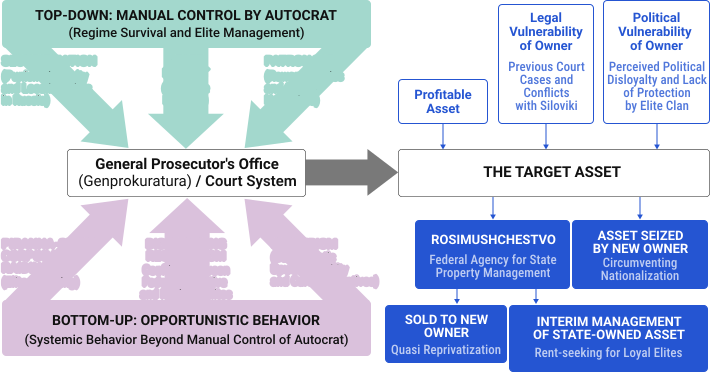
Our report highlights two main dynamics of property redistribution: top-down and bottom-up.

According to the top-down dynamic, in order to preserve the regime, the autocrat must support his winning coalition and prevent potential betrayal by the elites (Svolik, 2012). As Putin’s authoritarianism becomes more personalized, loyalty becomes a more important quality in selecting elites than competence (Burkhardt, 2021). In the context of renationalization and the redistribution of property, the regime first punishes actors for disloyalty, primarily for speaking out against the war. This largely continues the course toward deoffshorization and the redomiciliation of assets in Russia. A year before the annexation of Crimea, the Kremlin demanded the “nationalization of the elites” — namely, that rich officials and state managers return assets to Russia from foreign jurisdictions. Three years after the annexation, authorities and billionaires had developed special financial schemes for repatriating capital. We are now seeing a continuation of this process.

Secondly, the regime presupposes that Putin’s inner circle be the main beneficiaries, as he guarantees the regime’s existence. It is useful to keep in mind there are three groups of “oligarchs”: Putin’s friends, silovarchs, and outsiders (Markus, 2017). Putin’s friends are his inner circle and are linked to him by long-standing personal relationships (e.g., the Rotenbergs, Timchenko, and Kovalchuk). Silovarchs are “oligarchs” who have come from or closely interact with the security services (e.g., Igor Sechin). Outsiders are wealthy businesspeople who do not have direct personal access to Putin or the security bloc. Despite some simplification, this typology is useful. Our work shows that the key losers of the renationalization process were the outsiders, while Putin’s friends and silovarchs became the key beneficiaries. However, we will not use the term “oligarch” further in this report since, in the classical sense, there are practically none left in Russia who possess autonomy, the ability to influence key political decisions, or ownership of major media outlets. It is more accurate to refer to this group as business tycoons.

Thirdly, the stability of the regime ultimately depends on its ability to fulfill its social obligations (Desai et al., 2009). In the event of a budget deficit, renationalization is a means of replenishing the treasury by extracting income from enterprises or through further resale. Later in the paper, we present our estimates of the Russian state’s income from this process.

The second redistribution dynamic is a bottom-up approach where the renationalization process resembles a threshold model of collective action (Granovetter, 1978). Once actors lose assets due to lawsuits filed by the Prosecutor General’s Office, other participants are more likely to join the redistribution of property. As long as costs remain low and rewards remain high, this can have an avalanche effect, with everyone trying to grab their share of the rent.

The infographic above summarizes the top-down and bottom-up approaches, as well as the mechanisms that lead to the nationalization and expropriation of assets. As we will explain below, these mechanisms can operate separately or in combination. In the case of the current wave of wartime property redistribution, there is no single dominant model that can explain these phenomena.

For this study, we compiled two datasets.

The first dataset is a list of Russia’s largest companies with Russian beneficiaries. We did not consider foreign businesses. We compiled this list using the following sources: a ranking of the largest companies by market value traded on the Moscow Exchange and other platforms; a ranking of the largest companies by revenue for 2022 from Expert magazine; and the main assets of the top 100 participants from the Forbes list for 2014–2025. To compile this list, we gathered all the businesspeople who had ever appeared on the Forbes’ list of the richest Russians and ranked them by maximum capital over the entire period.

The yielded list is of 283 companies with Russian owners. We identified those that were nationalized or sold under pressure following Russia’s invasion of Ukraine in 2022, as well as those sold in connection with billionaires divesting from Russian assets. Combining these three sources enables us to compile a single dataset of the largest companies in terms of operating scale and the most highly valued assets on the market. In other words, it allows us to identify the key de facto systemic companies of the Russian economy (not according to Russian law, but according to their role and significance).

Our approach enabled us to track two sets of changes simultaneously: the changes that occurred among the largest companies as economic agents, including their ownership structure, and the changes in the role of key businesspeople as the most resourceful actors. However, smaller yet consistently profitable companies, which could also be tempting targets for competitors and the state, were not considered.

The second dataset includes all the confiscation of business assets lawsuits (over 170) filed by the Prosecutor General’s Office since 2022. (This data was collected in collaboration with anti-corruption expert Ilya Shumanov ― member of the board of Transparency International Russia, founder of the NGO Arktida, managing partner of TriTrace). The practice of filing lawsuits for asset seizure and termination of long-term lease agreements is also widespread among regional and local prosecutor’s offices. However, aggregating and systematically analyzing this array of court cases is beyond the scope of this study. We briefly described the history of nationalization in the 2000s and 2010s. The value of the seized assets is determined using accounting reports, stock quotes, or the opinion of relevant market analysts.

Wartime redistribution of property in Russia: Empirical findings

The pace and formal grounds for company seizures through nationalization after 2022

The pace of seizures increased sharply following the beginning of the war. There were 17 confiscations in 2022, 40 in 2023, 37 in 2024, and nearly 70 in 2025.

The value of confiscated assets has also surged. In 2025 alone, claims were filed for the confiscation of assets worth at least 2.7 trillion rubles, accounting for nearly half of all claims filed by prosecutors over the course of four years.

By analyzing the Prosecutor General’s Office’s claims and media reports on their proceedings (not all claims are published, but prosecutors anonymously disclose details through Russian state media), we can identify seven formal grounds on which the claims are filed.

The primary and most significant formal basis for the accusations is the alleged violation of anti-corruption legislation. This far outstrips all other accusations. Since 2022, 67 of the 170 cases of asset seizure are related to illegal enrichment. Another seven cases are related to recovering damages or losses for the state, which is also linked to the illegal enrichment of the objects of confiscation.

The second most common reason for seizures, with 21 cases, is the review of transactions not related to privatization, where the Prosecutor General’s Office deemed the purchase or ownership of a business illegal. A striking example is the revocation of fishing quotas and the seizure of trawlers and other assets from Far Eastern “crab kings” Dmitry Dremlyuga and Oleg Kan, whom the state took hundreds of billions of rubles worth of property from.

Illegal privatization is third with 14 lawsuits. On October 31, 2024, the Constitutional Court of the Russian Federation issued a ruling that effectively abolished the time limit for filing lawsuits to seize assets for state revenue in anti-corruption cases or cases involving violations of privatization rules. The fourth and fifth most common reasonings are the return of strategic assets of the Russian Federation, most often from foreign owners (13 lawsuits), and accusations of “financing the Armed Forces of Ukraine” (14).

In sixth place are two lawsuits seeking the return of military invention patents to the Ministry of Defense from private intellectual property owners. Rounding off the list is a single, rather anecdotal case: the confiscation of assets in November 2025 from Chelyabinsk entrepreneurs Andrei and Alexander Makhonin. They were recognized as the founders of the “extremist and banned in Russia international public movement Arrestant Criminal Unity (ACU).” The Prosecutor General’s Office filed two lawsuits against the Makhonins in October and December 2025.

For business owners, having a foreign passport or residence permit, as well as living abroad, is a serious risk factor. Of the lawsuits filed by the Prosecutor General’s Office, 65 cases (38%) involved owners of seized enterprises who lived outside of the Russian Federation. Specifically, it was known that the defendants had passports or residence permits from other countries in 59 cases.

Approximately 60 percent of asset seizures initiated by the Prosecutor General’s Office did not result in criminal proceedings against former shareholders of the companies. The same is true for a number of cases involving seized assets and corruption charges. Contrary to these charges, criminal cases under the relevant articles of the Criminal Code are not always initiated.

In fewer than half of the cases — 66 out of 170 — the owner is currently in custody, already imprisoned, or wanted for a criminal case that has been initiated against them. Of these cases, criminal prosecution or imprisonment began in about half of them even before the seizure of assets.

The main actors in the nationalization process are clans close to Putin, top managers of the largest state-owned companies, former Prosecutor General Igor Krasnov (now head of the Supreme Court), his deputies, the Prosecutor General’s Office, the Investigative Committee, courts of general jurisdiction, arbitration courts, the Federal Security Service (FSB) which assists investigative bodies in collecting materials for nationalization, the Financial Monitoring Service (Rosfinmonitoring) which assists law enforcement agencies in inventorying assets, the Federal Property Management Agency (Rosimushchestvo), the Ministry of Agriculture (part of the Patrushev clan, involved in the nationalization of agro-industrial and food assets), and the Ministry of Finance (responsible for privatizing state property). In some cases, agreements are reached behind closed doors with the Presidential Administration, where the Kremlin acts as a power broker and gatekeeper.

When discussing corruption cases and illegal privatizations, it is important to distinguish between official justifications and real reasons. Autocrats whose regimes depend on distributing privileges to a small winning coalition have little incentive to fight corruption effectively (Bueno de Mesquita et al., 2004; Magaloni, 2006). From time to time, dictators may resort to unsystematic justice for two reasons: first, to carry out selective purges of elites and redistribute rents; and second, to solve the problem of authoritarian control of the masses by sending them a signal about the restoration of social justice (Svolik, 2012). Authoritarian regimes' approach to fighting corruption usually involves centralizing power, establishing vertical control and penetration, and intensifying regime propaganda (Carothers, 2022). Such cases may also punish officials for failing to fulfill their tasks (Masyutina, 2025). Large-scale campaigns to eradicate corruption are generally a sign of intensifying intra-elite power struggles (Zhu and Zhang, 2017). It is important to note that the victims of such politically motivated campaigns are not only opposition figures but also systemic insiders with indisputable political loyalty (Buckley et al., 2022).

Redistribution of property among business tycoons on the Forbes Russia list

In the wake of Russia’s invasion of Ukraine in 2022, 30 out of 311 individuals (or 9%) on the Forbes Russia 2014-2025 list experienced either nationalization, attempted nationalization, or involuntary sale of assets on non-market terms. Of those affected, 17 billionaires are among the top 100 richest Russians of the last decade.

If we restrict the list of the Forbes Russia participants to the time period of 2021-2023, the share of billionaires affected by the changes will increase even further. In that case, 25 out of 204 people — 12% — were affected.

The Prosecutor General’s Office initiated lawsuits or brought criminal charges against 20 of the 30 billionaires. Of those 20 billionaires, 13 were stripped of their main assets in Russia. The total value of their seized assets amounts to 2.6 trillion rubles (27.5 billion euros). (We did not include the Prosecutor General's Office's lawsuit against Wintershall Dea, a German oil and gas company, in this calculation because it is not a Russian company. However, it is important to note that LetterOne, a holding company founded by Mikhail Fridman, Peter Aven, German Khan, and Alexei Kuzmichev, owned a 33% stake in it.)

Nine more cases involved the involuntary sale of Russian businesses. The value of these assets exceeds 1.6 trillion rubles (equivalent to 17.6 billion euros on the dates of sale). This amount does not include Renaissance Capital's Russian assets, which Mikhail Prokhorov sold in November 2024. The value of the brokerage and consulting business in Russia has not been published in the company's financial statements or the media before. Market analysts we surveyed also found it difficult to estimate.

Finally, Tatyana Kim and Wildberries’ case stands apart. When unexpected difficulties arose, 35% of the marketplace and its management were transferred to individuals likely associated with Suleiman Kerimov, an influential businessman from the 1990s.

Additionally, the forced redomiciliation of businesses launched by the Russian government in 2023 affected 18 people on the Forbes list. While re-registering a parent company from a foreign jurisdiction to Russia does not necessarily result in a loss of assets, it does put the business in a vulnerable position due to the general lack of property rights protection.

Since the early 2000s, the Russian economy has been characterized by a high level of offshore activity. A typical Russian corporation either had a parent company registered abroad, usually in Cyprus, the Virgin Islands, or the Netherlands, or was simply controlled by offshore companies. For instance, until 2024–2025, Yandex, Ozon, Tinkoff Bank, Alfa Bank, X5 Group, and Megapolis all had parent structures registered offshore. This structure was extremely convenient for businesses, as it minimized taxes, allowed capital to be pulled out of Russia, concealed the ultimate beneficiaries, provided access to the European credit market, and importantly, protected property rights. Disputes involving offshore companies were heard in European courts, not Russian ones. This largely protected businesses from pressure by authorities, security forces, and raider attacks.

Since 2011, Vladimir Putin has been talking about the need for deoffshorization. However, the resulting measures have only been partially successful. The 2022 war and European sanctions greatly helped the Russian leadership with this task (Glasius, 2025). Currently, the government has the power to include a large company on the list of economically significant organizations and then, through the courts, suspend the corporate rights of a foreign legal entity.

Since 2011, Vladimir Putin has been talking about the need for deoffshorization. However, the resulting measures have only been partially successful. The 2022 war and European sanctions greatly helped the Russian leadership with this task (Glasius, 2025). Currently, the government has the power to include a large company on the list of economically significant organizations and then, through the courts, suspend the corporate rights of a foreign legal entity.

This measure is formally presented as a “simplification of the transfer to Russian jurisdiction” of large companies that may face sanctions or other restrictions abroad. In some cases, recognizing a corporation as “economically significant” helps with management and dividend payments. However, the mechanism of forced redomiciliation makes big business vulnerable to the long arm of the state and other elite groups, as Vadim Moshkovich’s case illustrates: in February 2025, his company, Rusagro, was forcibly redomiciled to Russia. The following month, Moshkovich was arrested on charges of fraud and abuse of power.

Redistribution of ownership among the largest companies

We have compiled a list of the 283 largest companies in Russia, ranked by revenue and capitalization. Since 2022, nineteen of them, or nearly 7%, have been subject to involuntary sale or nationalization (or the threat thereof). A wide variety of businesses have been targeted, including logistics companies, car dealers, and banks.

The most common claim made by law enforcement agencies when seizing the largest companies is violation of anti-corruption legislation. Six of the cases fall under this category: the transport and logistics companies FESCO, UCL Rail, and Novorossiysk Sea Port; the energy companies TGK-2 and its subsidiary T Plus; and the car dealership Rolf.

Nevertheless, assets were seized or forced to be sold in anti-corruption cases even before 2022, though not on such a large scale. Law enforcement agencies now use the term “strategic assets” to describe this practice. In principle, any large business can be considered strategic. For example, Dmitry Kamenshchik and Valery Kogan had Moscow’s Domodedovo Airport seized in this manner. The main complaint was that “the beneficiaries, being residents of other countries, disposed of the assets of a strategic enterprise in violation of the Russian law and transferred its profits abroad.”

Another important tool of pressure involves formal market transactions, which reveal clear coercion to sell companies to specific buyers at undervalued prices. Typically, we learn about these transactions through the accounts of former owners. The most striking examples are the forced sale of Tinkoff Bank and Yandex. Oleg Tinkov, one of the few major businessmen to openly condemn the Russian invasion of Ukraine, sold his stake in the bank to Vladimir Potanin at a price well below market value. He mentioned threats of nationalizing the bank by the Presidential Administration. Yandex, the Russian equivalent of Google, was also forced to sell at a discount.

Additionally, we considered all “exits” from Russian assets by Russian billionaires after 2022 to be involuntary sales. This included shares in major companies such as Alfa Bank, Alfa Insurance, Ozon, Renaissance Capital, Lukoil, and KamAZ. The cost and details of these transactions were not disclosed.

Factors that may lead to asset seizure

1) Foreign ties (citizenship, residence permits, property, children’s citizenship)

According to open sources, 87 of the 281 Forbes billionaires with assets in Russia at the start of the war (31%) lived abroad or held foreign citizenship or residence permits, either currently or in the past. This group includes Gennady Timchenko and Boris Rotenberg, who are part of Putin’s inner circle; Roman Abramovich; Andrey Melnichenko — who fought off a lawsuit from the Prosecutor General’s Office (more on that below) — and Alisher Usmanov. Since Russia did not have a visa-free regime with the EU or the US, obtaining second passports and residing in multiple countries was an extremely common practice for billionaires before 2022.

Nevertheless, nine of the 20 billionaires who faced asset confiscation (or attempts at confiscation) lived abroad permanently. Another five are known to have had or still have foreign residency. In total, this accounts for 70% of those who faced nationalization.

At first glance, there appears to be a clear correlation between having dual citizenship and living abroad, and being targeted by the state. However, it is important to look deeper. Many of the “attacked” billionaires live abroad not entirely by choice. Boris Mints, Sergei Petrov, Leonid Lebedev, Yuri Shefler, and Mikhail Khodorkovsky all had a history of criminal cases and conflicts with the Russian state. After the war began, the Prosecutor General’s Office used the opportunity to reopen “old cases” and seize assets. “They had wanted to take it away for a long time, and now a good opportunity has arisen,” a source close to the Presidential Administration told Forbes, referring to the nationalization of Domodedovo Airport from Dmitry Kamenshchik and Valery Kogan.

Foreign ties are often used as a tool of selective justice against outsiders to the regime. Additionally, during wartime, it is convenient to present this to domestic voters as a patriotic cause.

2) Punishment for an anti-war stance and disloyalty

In December 2022, a court seized a $1 billion Sochi hotel complex and yacht marina from Oleg Deripaska. The Financial Times directly linked the confiscation to the billionaire’s anti-war statements. “The Kremlin asked him to calm down,” the publication quoted a source as saying. The marina is far from the businessman’s most valuable asset, however, it was in Deripaska’s personal use. His yacht, the Clio, was moored in the marina. The billionaire has a mansion not far from Sochi, in Kuban.

In ten cases, we can identify the factor of "disloyalty" among businesspeople in a broad sense. Examples range from the forced sale of Tinkoff Bank due to Oleg Tinkov’s anti-war statements to the confiscation of the KDV Group food holding company from Denis Shtengelov because of his father’s Ukrainian citizenship.

However, this factor should not be overestimated. Of the 20 businessmen who faced legal proceedings, only eight criticized the war or Putin, or expressed sympathy for the victims and support for peace. Five of those eight live abroad and have a long-standing conflict with the Russian authorities. For comparison, 25% of the top 100 Forbes list participants spoke out in favor of peace or against the war. Among them are super-rich individuals such as Alexei Mordashov, Vladimir Lisin, and Andrei Melnichenko, who managed to defend his assets in a dispute with the Prosecutor General’s Office. Moreover, support for the “Special military operation” (“SVO”), as in the case of Konstantin Strukov or Yuri Antipov, did not help protect assets.

As a result, we can assume that, especially at the beginning of the war, calls for peace and sympathy for civilians were an acceptable reaction, rather than overt criticism. The only risk is that such a position could attract public attention, reminding the security forces of long-standing claims, as may have happened in Denis Shtengelov’s case. It could also prompt detractors to report them, as in the case of Vadim Moshkovich.

3) Return on assets

We estimate the total value of assets owned by billionaires facing lawsuits to be 2.7 trillion rubles (27.6 billion euros). Almost all of them, except for TGK-2 and Dalnegorsk GOK, generated billions in net profit. Three of them — AO Pervaya Gruzovaya Kompaniya, FESCO, and Rusagro — are among the top 100 largest companies in Russia in terms of net profit.

4) Past conflicts with the FSB or criminal cases

Another important factor is the presence of past conflicts with the FSB or criminal cases. In more than half of the cases (12 out of 20), the lawsuits filed by the Prosecutor General’s Office can be explained by long-standing conflicts or claims by the authorities against billionaires. Examples include the seizure of Moscow’s Domodedovo Airport from Dmitry Kamenshchik and Valery Kogan, who had been fending off attacks from security forces since at least 2011. Or the nationalization of Yuri Shefler’s companies — Shefler is the owner of the Stolichnaya vodka brand and left Russia due to a criminal case opened against him in 2002.

It is important to note that conflicts with Russian state bodies are also quite common. Over the years, Viktor Vekselberg, Mikhail Prokhorov (who is selling his businesses and leaving Russia), Mikhail Gutseriev, Vladimir Evtushenkov, and others have had issues with law enforcement and government entities. However, they have managed to keep their assets in Russia thus far.

5) Political activity

Of the 20 Forbes billionaires who have been sued by government agencies or prosecuted, eight were previously involved in political activities — they were senators or deputies. Not all of them opposed the authorities. For example, Konstantin Strukov has been a member of the ruling United Russia party since 2005 and is considered one of its largest donors. However, having a career as a deputy or official while developing one’s own business, a common practice in Russia, carries the risk of anti-corruption lawsuits.

6) Strategic enterprise

The prosecutor’s office indicated that four enterprises owned by five billionaires were of strategic importance to the country when nationalizing them. Three of the companies’ owners lived abroad, according to the prosecutor’s office, though the owners of Domodedovo Airport denied this. In the case of the nationalization of the Chelyabinsk Electrometallurgical Plant (CHEMK), the owners’ residence in Russia did not help them since the plant was “integrated into the production chains of the defense complex.”

According to a study by the online publication Proekt, 83 of the 200 Russian billionaires (41.5%) have owned enterprises in the defense-industrial complex or have supplied resources to defense factories and the army since 2014. Meanwhile, only five of the 20 billionaires who received lawsuits from the Prosecutor General’s Office are on Proekt’s list (25%). Perhaps, cooperation with or “integration into the chains” of the defense-industrial complex, coupled with loyalty to the regime, can serve as a form of asset protection. However, it is more likely that such companies have already been placed in “reliable hands.”

Key mechanisms of wartime redistribution of property

Our data shows that there has been no dominant pattern in the process of property redistribution since 2022. Rather, there are several mechanisms that must be considered on a case-by-case basis. The initiation of compulsory or semi-compulsory seizure or hostile takeover (full or partial) depends on several factors, including the quality and value of the company; the owner’s loyalty, public position, and conflicts; the owner’s economic plans; and the business interests of individuals associated with Putin.

We believe that the current wave of nationalization and expropriation in Russia may have parallel mechanisms (see the infographic in chapter "Two dynamics of property redistribution").

Wartime securitization

Vladimir Putin voiced this reason for nationalization from the podium. Back in 2022, he explained that businesspeople operating from abroad could be agents of hostile influence. “You see, the thing is: if a person lives here, that’s one thing. But if a person does not connect their life with this country and simply takes money out of here — if everything is there, abroad — then they do not value the country where they live and earn money. They value good relations where they have property and money in their accounts. Such people are a danger to us.”

A classic example of this type of seizure is the nationalization of Metafrax, the largest methanol producer in Russia, from Seifeddin Rustamov, who has been a resident of the United States for a long time.

Additionally, owners who are potentially disloyal, criticize the government, do not support the invasion of Ukraine, and have Ukrainian relatives also fall into this category. Simultaneously, the nationalization of businesses intimidates the Russian elites and forces them to show greater loyalty, particularly through deoffshorization and financial support for the war or regional projects.

State budget

Nationalization is a means for the Russian state budget to generate revenue. Assets worth 0.9 trillion rubles (9.9 billion euros) have been sold or transferred to management, accounting for approximately 0.5% of Russia’s expected 2025 GDP. The largest deals were the sale of Metafrax Chemicals to Roskhim, which is owned by the Rotenberg family, and the sale of the Far Eastern Shipping Company to Rosatom, a state-owned company.

Rosimushchestvo’s balance sheet still shows business assets worth at least another 2.5 trillion rubles (27.6 billion euros, or about 1.2% of GDP). Meanwhile, eight of the nine nationalized companies owned by billionaires whose financial statements are available reported net profits. On average, this amounted to 16.9 billion rubles (180 million euros) in 2024. Thus, selling nationalized companies could be an important way to replenish the military budget.

Redistribution of property as a means of wartime patronage

The new owners of companies that were seized from billionaires on the Forbes list or that were involuntarily sold are:

  • Friends and associates of Vladimir Putin, such as Roskhim (linked to the Rotenbergs), the acquired Metafrax and the Dalnegorsk Mining and Processing Plant. Yuri Kovalchuk acquired a stake in the Ozon marketplace. According to media reports, Kovalchuk is also behind Pavel Prass, who bought 14.4% of Yandex.
  • State corporations: TGK-2 was transferred to Gazprom Energoholding; Rostec is preparing to acquire CHEMZ; Ariant is held by Rosselkhozbank, and the Novorossiysk Commercial Sea Port by Transneft.
  • Loyal Billionaires: Vladimir Potanin bought Tinkoff Bank at a discount, and his company acquired a stake in Yandex, as did Lukoil, which is partially owned by Vagit Alekperov.
  • New business elites: So far, this is the rarest option for asset distribution, if not the most exotic. In our sample, car dealer Rolf was acquired by Umar Kremlev, the president of the International Boxing Association.

The SayanChimPlast case illustrates an important driving force behind the redistribution of assets—their transfer to Putin’s close associates (top-down redistribution)—who have known him for 30 to 40 years. The Roskhim group, linked to Arkady Rotenberg, wants to buy this polyvinyl chloride manufacturer. The group has purchased five nationalized large chemical producers: Bashkir Soda Company, Volzhsky OrgSintez, Metafrax Chemicals, Dalnegorsk Mining and Processing Plant, and Kuchuksulfat. The Prosecutor General’s Office took over the latter in 2021. The group has also taken control of Salavatneftemash.

Elite infighting

Since the start of the war, the agro-industrial, alcohol, and food production businesses have been divided among four clans close to Putin. These clans actively compete with each other and take over assets nationalized by the Prosecutor General’s Office. These clans are VTB (trading and grain cultivation), Kovalchuk (grain cultivation), Rotenberg (alcohol), and Patrushev (grain trading and production of pasta and alcohol). Market participants interviewed by one of the authors of this report expect new hostile takeovers in these sectors. Producers of alcohol, agricultural products, and food are an important source of domestic and export revenue. They are also a tool with which the Kremlin can influence countries in the Global South that depend on Russian imports.

Dismantling regionalism: uprooting of regional clans by federal siloviki

Regional business elites are often targeted. The Prosecutor General’s Office has launched a campaign to weaken these groups. Examples include the seizure of Viktor Ochkalasov’s land and agricultural enterprises in the Krasnodar Krai; Vladimir Nikolaev’s real estate and land in Vladivostok; Magomed Kaitov’s power grids in the Stavropol Krai; the Magomedov family’s Dagnefteprodukt in Dagestan; and Sayanskhimplast in the Irkutsk region from former head of the regional Legislative Assembly Viktor Kruglov and his family.

In these and a number of other cases, it is important to note that assets are being seized not from a single owner, but from a group of relatives or partners. This is also a new trend that emerged in 2025. This is likely part of a long-term trend of dismantling the cohesion and horizontal ties among regional elites, causing their fragmentation. Additionally, a similar mechanism can be seen in each of these cases. For instance, Dagnefteprodukt’s fate reflects the struggle for influence among local security officials — an FSB officer from Dagestan was appointed manager of the company.

Bureaucratic politics and career incentives of siloviki

Konstantin Strukov’s case stands out sharply from those of the other billionaires affected by nationalization. Strukov lives in the Chelyabinsk region, an industrial area in the Ural Mountains, not abroad. He has provided financial support to the military both personally and through his company, Yuzhuralzoloto. Furthermore, Strukov has been a member of the ruling United Russia party since 2005 and is considered one of its largest donors.

So why was his property seized? One of the allegations against Strukov is that he “interfered in the consideration of a lawsuit” to seize the company of another Chelyabinsk businessman, former governor Mikhail Yurevich. Specifically, Strukov tried to help Yurevich hide his property by transferring it to intermediaries.

This is a striking example of the increased opportunities for prosecutors and other law enforcement agencies to target wealthy and influential individuals. For prosecutors, these cases present an opportunity to advance their careers or make money by seizing assets or threatening to do so. For the prosecutor’s office as a whole, nationalization is a way to demonstrate its importance and divert budget resources from other agencies.

Multiple mechanisms at once

In the largest confiscations, several mechanisms function at once. One important case study is that of Rusagro owner Vadim Moshkovich, whose net worth is $2.9 billion. His case reflects three patterns: wartime securitization, elite infighting, and top-down redistribution of property. The conflict surrounding his business began in 2023 at the latest. For a while, the billionaire managed to defend himself successfully, however, his opponent turned to the FSB, which has a long history of involvement in internal corporate conflicts, and most likely enlisted the help of someone in high places. This opponent’s former business partner was State Duma Chairman Vyacheslav Volodin.

Then, in April 2024, a denunciation was filed against Moshkovich, requesting that he be recognized as a foreign agent. In July, his company was added to the list of economically significant companies. In February 2025, Rusagro was forced to change its registration from Cyprus to Russia. In March 2025, Vadim Moshkovich was detained in Moscow on charges of fraud and abuse of power.

There are several reasons for the attack on Moshkovich’s business. Firstly, it is large, profitable, and promising. Secondly, the billionaire tried to lift sanctions against himself in an EU court, claiming he doesn’t influence government policies, despite attending Putin’s meetings with major businesses, nor does he fund Russia’s aggression against Ukraine, despite being a major taxpayer. The Kremlin often views this as a sign of disloyalty. Thirdly, assets in agribusiness have recently been taken over by VTB and the Kovalchuk family (through the Demetra holding company), as well as the Patrushev family (through Rosselkhozbank). Additionally, Moshkovich planned to enter the global agribusiness market. In doing so, he crossed paths with Patrushev, VTB, and the Kovalchuk family because the Kremlin entrusted them with agricultural product trade. This trade is important to Putin because Moscow wants to influence buyers, mainly in Africa and Asia, through grain and oilseed supplies. For this reason, Rif, the largest grain trader owned by Petr Khodykin, was nationalized and transferred to Rosselkhozbank’s management.

According to market insiders, Moshkovich’s assets could be purchased by either Demetra or entities belonging to Rosselkhozbank. The verdict handed down to Moshkovich could set a precedent for future transactions involving the confiscation and redistribution of assets. At the same time, the verdict will serve as a litmus test for other businesspeople. If they see that Moshkovich agreed to give up his business in exchange for not receiving a real prison sentence, they will know what to expect if similar charges are brought against them.

Who was able to successfully resist the process of nationalization?

Only five defendants successfully fought off the agency’s claims with prosecutors withdrawing their lawsuits or agreeing to a settlement. The substance of these agreements and the reasons for the withdrawals are unknown.

Andrei Melnichenko is the most important example. He was No. 7 on the list of Russia’s richest people in 2025 and No. 135 in the world, with a personal fortune of $17.4 billion. In August 2023, the Prosecutor General’s Office demanded the seizure of SibEKO, which is not Melnichenko’s largest asset.

The real reasons behind the claims of the Prosecutor General’s Office are unknown and have not been reported in the media. The lawsuit was a continuation of the criminal case against former Minister for Open Government Affairs Mikhail Abyzov, who was arrested in 2019. Melnichenko, who resides abroad permanently, purchased SibEKO from Abyzov. Shortly before the lawsuit was filed in July 2023, billionaire Oleg Tinkov stated that Melnichenko opposed the war and hated Putin. After the lawsuit was filed, the Financial Times published an interview with Melnichenko, who answered affirmatively when asked by the reporter if Russia’s actions in Ukraine were criminal. However, he later clarified that he considered only attacks on civilian targets to be crimes.

Nevertheless, Melnichenko managed to fend off the Prosecutor General’s Office’s claims when his company reached an amicable agreement with the agency. The agreement states that the billionaire had to pay “toward social charity”, but it does not specify which project he spent the money on or how much. “The funds specified in the agreement are directed toward social charity in the field of education and children’s education,” according to the official statement.

The other four cases in which defendants managed to “fend off” the claims of the Prosecutor General’s Office are:

  • Russian plants of the German company Heidelberg Cement. We included this asset on our list because the Prosecutor General’s Office went after it in a lawsuit. Company representatives told the court that they had found “other legal means to protect the interests of the state.”
  • A group of small Sochi-based companies involved in real estate and construction.
  • Sakhalin Shelf Service and Vostok Inkom are oil and gas service companies owned by former Rosneft president Sergei Bogdanchikov. The Prosecutor General’s Office withdrew its lawsuit after the assets were purchased by the Qatari company Technology Bridge for Research and Development, whose owner is unknown.
  • Vladimir Gelman, an employee of the Ryazan Military-Industrial Complex, may own patents, one of which is for helicopter radar target tracking. The case was initially dismissed for unknown reasons; it is classified, and the materials have not been published.

Conclusions and implications

Main beneficiaries of the redistribution of property

Russian billionaires have been relatively unaffected by nationalization. Most of those having their assets seized are regional businesspeople, government officials, legislative body deputies, security officials, and judges.

The main beneficiaries are key Russian state corporations, such as Gazprom, Rosatom, Rostec, Transneft, FGUP NAMI, VTB, and Rosselkhozbank, as well as Putin’s longtime associates, including the Kovalchuks, Rotenbergs, and Patrushevs. They received assets as a result of more than 90% of the claims filed by the Prosecutor General’s Office — 16 claims — after which the authorities either sold the seized assets or transferred them free of charge as a contribution to the authorized capital. The total value of the assets is about 0.9 trillion rubles. Following the review of eight lawsuits, assets worth over 400 billion rubles were transferred to management but remain on Rosimushchestvo’s balance sheet.
Strategically, it is important for the authorities to encourage and nurture new beneficiaries, who are already emerging, in order to create a new elite that will support the “post-2022” regime. In practice, however, such cases are still rare. Examples include Umar Kremlev, who acquired the largest car dealership Rolf; and FSB officer Marat Takaev of Dagestan, who took control of Dagnefteprodukt. Perhaps we will see more cases of this kind with relatively unknown individuals in the future . In the long term, this could lead to conflict between the old and new elites.

It should be noted that another process is forming the new wartime elites much more quickly and effectively: the purchase of assets from foreign companies that have left Russia. For example, Alexei Sagal’s Arnest group purchased Ball and Heineken factories, and the AGR group acquired Volkswagen and Hyundai car factories. The owners of the AGR group are unknown.

Absence of collective action by big business as a guarantee of the regime’s stability

The pace of redistribution is accelerating, and tensions are rising. Just because the process is under control now does not mean it always will be. Deputy Andrei Makarov’s emotional speech, which went viral after SPIEF-2025 and criticized thoughtless nationalization, among other things, resonates with many insiders of the regime. The Central Bank is also dissatisfied with the “military redistribution,” which reached the Supreme Court in order to defend the interests of the minority shareholders of the Solikamsk Magnesium Plant, who lost their property when the enterprise was transferred to Rosatom at the Prosecutor General’s Office’s request.

In the foreseeable future, it is highly unlikely that big business tycoons will rise up to challenge Putin. Coordinating joint action in today’s Russia seems practically impossible. The atmosphere of fear and the lack of infrastructure for cooperation would negatively affect any strategy against Putin. Even if we see individual defectors or groups, they are unlikely to have enough power to successfully challenge Putin. They will most likely repeat the fate of Khodorkovsky and Berezovsky, who were selectively repressed and had their assets redistributed.

Before the war, businesspeople had many exit opportunities, such as foreign documents, businesses, property, and personal connections. Since 2022, the situation has changed somewhat, but most businesspeople still have similar options. Those who do not have these opportunities are more focused on their own survival than on opposing the regime.

Real cooperation within the business community can only be expected if the following conditions are met:

  • The costs of maintaining the status quo must become substantial for most elites, including insiders. Some of Putin’s inner circle must begin to bear these costs.
  • There must be a split in the ruling coalition, creating a “window of opportunity” for transition.
  • A credible alternative scenario must emerge that offers more reliable property protection.
  • The regime’s ability to selectively repress individual actors must be reduced.

Despite the problems that Putin’s system creates for the Russian elites, his main function at the highest level is arbitration. In situations of major intra-elite disputes, he decides how a particular conflict should be resolved. However, Putin’s focus on the war, as well as his age, raises the question of how effective he will be in this role.

The redistribution process in the context of arbitration appears predatory, and Putin only partially controls it. The most striking example of this is Ramzan Kadyrov’s de facto noncompliance with the Kremlin’s and Putin’s decision regarding the dispute between the two Wildberries marketplace shareholders, former spouses Tatyana Kim and Vladislav Bakalchuk.. After the deal was agreed upon in the Presidential Administration with Suleiman Kerimov’s participation (who backed Kim), Kadyrov (siding with Bakalchuk) proceeded with a raider takeover of the company in the center of Moscow. Despite his venture’s failure, Kadyrov has not been punished. Ramzan Kadyrov’s case has always been extraordinary, and he has been allowed much more freedom than others due to the specificity of the relations between Chechnya and the Kremlin following the Chechen wars. However, this should not be underestimated — after the failed raid, the Kremlin’s reaction was unclear. If the elites realize en masse that Putin cannot arbitrate, the risk of increased conflict and the search for an alternative arbitrator increases.

Political risks to the stability of the regime and wishful thinking

The redistribution serves as a consolation prize for elites who, due to sanctions and isolation, can no longer obtain resources and generate free cash flow at pre-war levels, as Elina Rybakova, an economist at the Peterson Institute for International Economics, explained in an interview with one of the authors of this report. However, this method of distributing benefits poses risks for two reasons.

Firstly, wartime budget constraints have significantly limited the resources available for feeding the elite. This means that the competition for the remaining money and assets within the country will intensify.

Secondly, as demonstrated above, assets can be seized for a variety of reasons and according to several scenarios involving various actors at the federal and regional levels. The fact that the rules have become much less clear — no one knows who the next target will be or why — may increase tension within the system, exacerbate its imbalances, and lay the groundwork for major conflicts between elites.

However, it would be a mistake to believe that potential internal conflicts resulting from the redistribution could undermine Putin’s regime or lead to opposition and criticism of the war in the near future. Even when individual officials or lobbyists, such as the President of the Russian Union of Industrialists and Entrepreneurs (RSPP), Alexander Shokhin; the Minister of Economic Development, Maxim Reshetnikov; and the Central Bank, allow themselves to mildly criticize nationalization, they do not question the Kremlin’s overall economic and political course.

It would be wishful thinking to hope that an increase in seizures would force businesspeople to unite and defend their rights. Collective action is a “red flag” for the regime. At the beginning of the first Yukos case, for example, Putin called collective demands “speculation and hysteria” and demanded that they stop. Businesses are well aware that any association based on dissatisfaction with the Kremlin policy is considered an extreme form of disloyalty and punished accordingly. The regime is structured in such a way that while it is possible to criticize the policies of individual state actors, it is not possible to create associations to defend oneself against the security forces and Putin’s allies who seek to expand their business empires.

Coercion into loyalty

At the same time, nationalization is a disciplinary measure that keeps the entire business community in check. It is a means of punishment that the authorities can use at any moment to deter private businesses from acting in a disloyal manner.

The fact that the most profitable and strategically important assets are given to state-owned companies and Putin’s allies suggests that the redistribution is controlled by those at the highest levels of power in Russia. At the same time, however, the Prosecutor General’s Office is seizing dozens of small and medium-sized enterprises of regional importance, as well as land plots and commercial real estate, through lawsuits. The Kremlin or senior federal officials are unlikely to be immediately involved in these seizures.

This suggests that the Kremlin is likely to maintain control over the largest and most important enterprises and that the siloviki can only exercise autonomy where it does not affect the interests of the highest-level elite groups and Putin’s inner circle.

Ways to replenish the budget and risks to economic development

Large-scale property confiscation poses several significant risks to the economy.

Firstly, business owners cannot be sure that they will retain their status tomorrow, which makes it difficult for them to plan for the long term, which further deprives the economy of the resources it needs for modernization. Unprecedented sanctions have also cut Russia off from foreign technology and international capital markets. The further erosion of rules that were already rather arbitrary and the destruction of institutions that still existed in pre-war Russia are additional factors slowing down an economy that is already on the brink of recession.

Secondly, from an economic growth standpoint, it is important that assets are transferred to owners who will create conditions for their more effective development through transparent competitive transactions conducted according to the rules. However, we currently observe non-market,

deals and the distribution of assets among groups associated with the Kremlin. These types of mergers and acquisitions are less likely to lead to increased labor productivity, revenue, profits, taxes, and job creation.

Thirdly, the excessive concentration of businesses in the hands of state and quasi-state entities, coupled with the increased dependence of businesses on government authorities, reduces incentives for competition. This exacerbates the already high degree of monopolization in the Russian economy and limits potential growth rates.

Fourthly, Elina Rybakova, a senior fellow at the Peterson Institute for International Economics, told one of this report’s co-authors that state or quasi-state owners are always less efficient than private ones. This is another reason why such mergers and acquisitions are worse for labor productivity and economic growth. Even the Accounts Chamber itself has identified the inefficiencies in managing seized property.

Nevertheless, nationalization is an important way to replenish the budget. Assets worth 0.9 trillion rubles (9.9 billion euros) have already been sold or transferred to new management. Another 2.5 trillion rubles (27.6 billion euros) in business assets remain on Rosimushchestvo’s balance sheet and can be sold as well. The revenue generated from selling confiscated businesses is estimated to be equivalent to the impact of the 2026 tax reform, which includes an increase in VAT and other taxes, as well as the elimination of several tax exemptions. This reform is expected to generate 1.7 trillion rubles (18.7 billion euros).

The impact of the redistribution of property on the “post-Putin” period and possible trajectories of development

Our basic assumption is that Putin will seek to remain in power until he dies or becomes physically unable to lead the country. Given the high degree of turbulence and unpredictability of decisions taken, even for high-ranking political actors, it is virtually impossible to assess what will happen in many years’ time.

It's not likely that the country will adopt a more open political system in the wake of Putin, following the example of third-wave democratization. Rather, there are two possible trajectories. The first is that the regime will further solidify and that authoritarian power will remain in the hands of Putin’s successor or a small group of his confidants who will not conflict with each other.

The second possible trajectory is the weakening and fragmentation of authoritarianism. This occurs when confrontations between various groups of elites intensify and there is no single arbiter. This can also happen when an aging dictator’s power weakens, even while he is still in office.

Neither scenario shows any sign of state and elite players refraining from redistributing property. If the first trajectory is chosen, entrepreneurs who acquired assets during the post-Soviet redistribution and are not part of Putin’s inner circle (“the Cooperative Ozero”) will likely suffer, unless they sell their businesses beforehand (as Leonid Fedun did) or lose them earlier. This means that the risks for members of the Forbes list will increase over time.

Similar risks will remain in the second scenario, “everyone against everyone,” but in this case, they will be offset by billionaires’ ability to defend themselves. They will do so by creating and developing “protection” within the government and security forces and by forming their own protective organizations and armed units, as was done in the 1990s. The billionaires’ experience with private military companies, which they began forming after 2022 for the war in Ukraine, could be leveraged here.

Due to the high degree of uncertainty, it is difficult to judge the long-term consequences of the renationalization process for Russia’s political future. What we can say for certain is that the current process is reducing the number of outsider businesspeople while increasing the influence of Putin’s allies and the siloviki. Such dynamics are undesirable for potential democratization. Democracy thrives in environments with greater business diversity, where there are fewer large forces that can dictate terms. In such a situation, the likelihood that the old beneficiaries will choose a new autocrat who guarantees their property rights increases.

However, any regime transformations that occur will involve multiple actors and take place under exceptional circumstances. We are in the midst of a process that we do not fully grasp, with an avalanche-like potential. Will we see an increase in pace in 2026? How will property continue to be redistributed in the context of a growing budget deficit and depleted rent flows? Will there be new cases of disobedience to Putin’s decisions? Is a redistribution expected with regard to other major players, including those closer to Putin? What does the replacement of Prosecutor General Igor Krasnov by Alexander Gutsan in fall 2025 mean? The answers to these and other future questions will help us understand the possible long-term consequences.